

Most homes were not built for the way we live now. Worktops disappear under piles of post and tangled chargers, the spare room is somehow an office, a gym and a guest room all at once, and the kitchen feels cut off from everyone else in the house.
Modern home design is quietly fixing all of this. The seven features below are not about chasing trends. They focus on real, daily benefits, and most of them work just as well in a new build as they do in a renovation of an older home.
Open-Plan Living Spaces That Match Modern Family Life
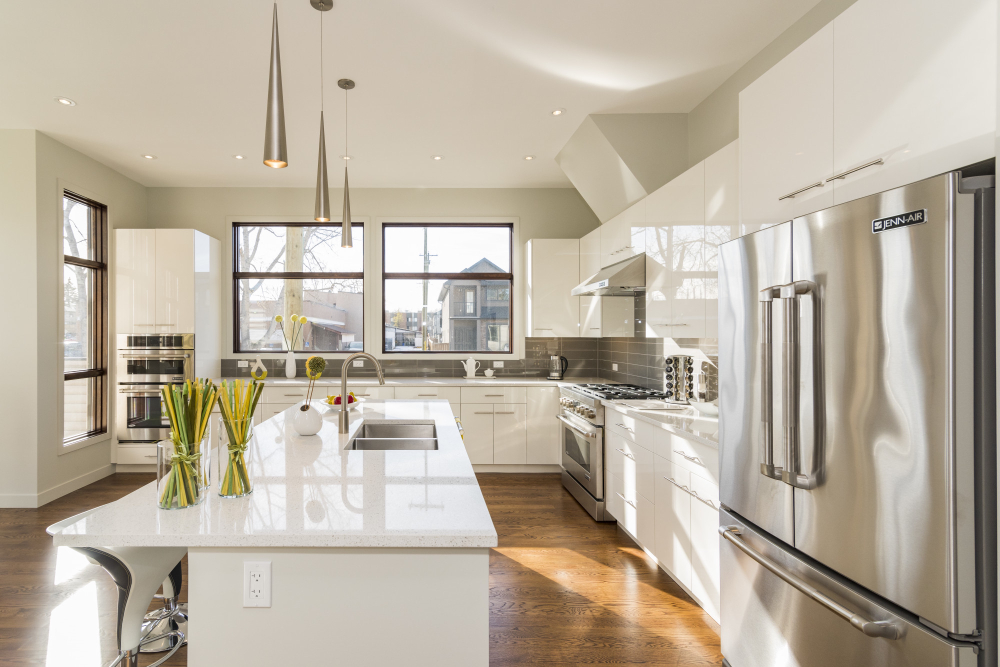
Open-plan kitchen, dining and living areas have stayed popular for one simple reason: they match how families actually spend time together. Cooking, eating, helping with homework and watching something on the sofa can all happen in the same connected space without anyone feeling shut away. Light also travels much further when walls come down, which makes smaller homes feel noticeably bigger. If a full open plan is not realistic, even widening one doorway or replacing a solid wall with a half-height partition or glazed divider can change how a room feels day to day.
Natural Light Treated as a Design Feature
Light is one of the cheapest design upgrades and one of the most underused. Floor-to-ceiling glazing, taller windows, sliding doors and a single well-placed rooflight can completely change a room. A dim north-facing kitchen feels like a different space once a rooflight goes in above the island. Glazed doors that open onto a patio or garden also blur the line between inside and out, which is something modern design leans into heavily. When you plan a renovation, treat windows and lighting as a feature, not just a fitting.
Flexible Rooms That Earn Their Keep
Hybrid and remote working are no longer a phase. According to the Office for National Statistics, 28% of working adults in Great Britain now work from home at least some of the time. That changes what a home needs to do. A single, well-planned room with a fold-down desk, a sofa bed and good storage can serve as an office on weekdays, a guest room at the weekend and a quiet reading spot in the evening. One flexible room often beats three single-purpose ones.
Smart Security That Fits Into the Design
Modern homes are designed to feel open and easy to live in, but security still shapes how comfortable a space feels. According to the Argos UK Smartest Homes Index, 15% of UK homeowners named home security as their top priority for upgrades in 2026, ranking it ahead of kitchens and heating. The good news is that today’s systems are far less intrusive than they used to be. Slim video doorbells, neat smart locks and tucked-away alarm panels can all sit inside a clean, minimal interior without standing out. Working with a specialist security provider like Barry Bros means these elements can be planned into the design rather than bolted on afterwards. Good security is part of good design.
Smart Storage That Keeps Clutter Out of Sight
A minimalist look is almost always the result of clever storage rather than fewer belongings. Built-in joinery, walk-in pantries, mudrooms with cubbies, and full-height cabinetry around appliances all help. A row of fitted cabinets next to the fridge can replace several mismatched units and free up valuable wall space for art or a window. Under-stair drawers, bench seats with hidden storage, and integrated wardrobes do the same job in smaller homes.
Energy Efficiency Built In From the Start
Good insulation, double or triple glazing, efficient appliances, a heat pump and well-sized solar panels all lower bills and improve comfort year-round. The Energy Saving Trust notes that home energy upgrades can cut both running costs and carbon emissions significantly, and energy-efficient homes typically hold their value better at resale. Even smaller steps, such as draught-proofing, LED lighting and smart radiator valves, add up quickly. If you are renovating, it is almost always cheaper to build efficiency in from day one rather than retrofit later.
Smart Home Technology That Genuinely Helps
The best smart home tech is the kind you stop noticing. Lighting that adjusts to the time of day, a thermostat that learns your routine, app-controlled blinds, and a single app that handles most of it. According to ENERGY STAR, a certified smart thermostat saves the average household around 8% on heating and cooling bills, which adds up quickly over a few winters. Pick a small number of devices that solve real problems in your home rather than buying every gadget in the market.
Pulling It All Together
A modern home should feel calm, flexible and effortless to live in. Every feature here earns its place because it solves a real, everyday problem, whether that is clutter, rising bills, working from home or feeling safe at night. The best designed homes are not the ones with the longest feature list. They are the ones that quietly work, and the ones designed to suit you for the long term.
If you are planning a renovation or a new build, pick the two or three features that match how your household actually lives, get those right first, and add the rest over time. Even one well-chosen upgrade, whether that is better storage, a flexible spare room or a tidier security setup, can change how your home feels day to day.

