

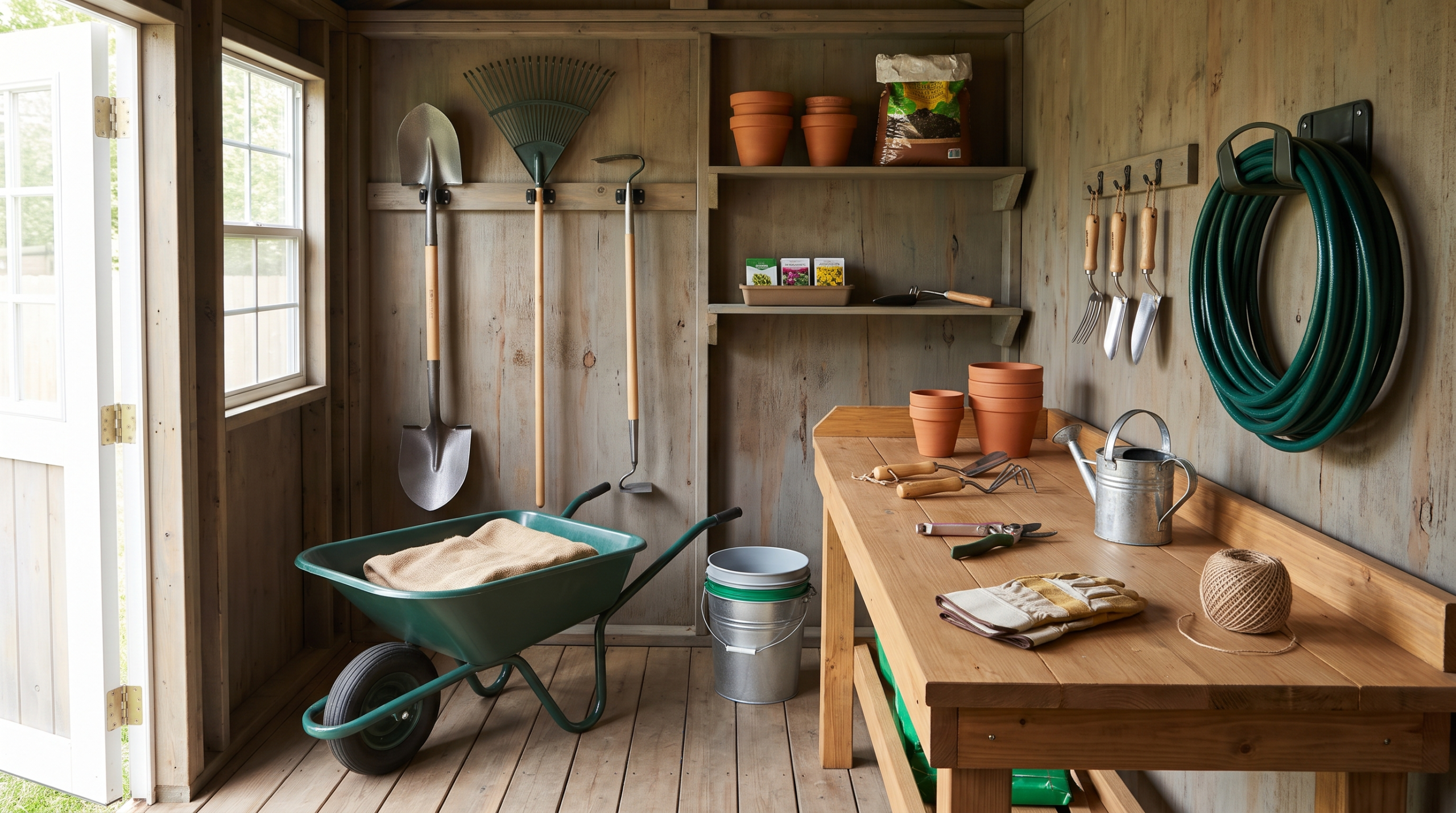
Most garden storage problems start the day the shed arrives. It looked the right size online, but the mower only goes in at an angle, the bikes block the door, and by February the seat cushions smell of damp. The issue is rarely the structure itself. It is that the storage was chosen for how it looked or the gap it filled, rather than for how the garden is actually used.
Planning storage the other way round, starting with what you do outside and what that leaves lying around, gives you something that works every week instead of something you work around.
Start With What Actually Needs a Home
Before thinking about sizes or materials, walk around the garden and list everything that currently lives outside, in the garage, or in the hallway because there is nowhere else for it. Most lists fall into a few groups:
- Gardening tools such as spades, rakes, shears and hoses
- Lawn equipment, including mowers, strimmers and leaf blowers
- Outdoor furniture, cushions and parasols
- Children’s bikes, scooters and outdoor toys
- Seasonal items like barbecues, Christmas decorations and paddling pools
- Fuel, compost, seed and chemicals
The last group needs some thought. Petrol for a mower, for example, comes with its own rules. Hampshire Fire and Rescue Service notes that you can legally keep up to 30 litres of petrol at home without telling your local Petroleum Enforcement Authority, and anything flammable is better kept away from the house in suitable containers.
Let Your Garden’s Use Shape the Storage
Two gardens of the same size can need completely different storage, depending on what happens in them.
A Small Decorative Garden
A courtyard or compact garden built around seating and pots usually has modest needs: a few hand tools, a watering can, some cushions and perhaps a folding table. Here, storage should take up as little space as possible. A slim unit against a wall or a storage bench that doubles as seating is often enough, and it keeps the focus on the planting.
A Family Garden
Family gardens tend to collect the widest mix of things. Bikes, balls, goalposts and sandpit lids all compete for space with the mower and the barbecue. Easy access matters more than anything here. If children cannot get their own scooters out and put them back, the lawn becomes the storage. Wide doors, a clear floor area for wheeled items and hooks at child height make a real difference.
A Space Used for Regular Gardening
Keen gardeners need storage that behaves more like a workspace. Tools are used several times a week, so they need to be visible and within reach rather than buried. Shelving for pots and seed trays, a surface for potting on and room for bags of compost all come into play, and the storage often works best close to the beds or greenhouse.
Size It for the Largest Item and the Next Few Years
Measure the biggest thing you plan to store, then think about how you will get it in and out. A mower might fit inside, but if it has to be lifted over a step or turned on its side to get through the door, it will end up left outside. Leave space to move around once everything is in place.
It also helps to think a few years ahead. A young family will soon add bigger bikes, and a growing interest in gardening tends to bring more tools. Building in some spare capacity now is easier than adding a second structure later.
Positioning: Where Storage Works Hardest
The best position is usually close to where things are used. Lawn equipment is easier to manage near the grass, while furniture cushions are better stored near the patio. Mapping out the garden first, either on paper or with one of the garden design apps now available, helps you see how people actually move around the space.
Check the rules before settling on a spot. The Planning Portal explains that most outbuildings count as permitted development, but anything within two metres of a boundary must not be more than 2.5 metres high, and structures cannot sit forward of the front of the house.
Protecting What You Store From the Weather
Good storage keeps things dry, not just out of sight. Damp is the main enemy, and Which? warns that a damp storage area quickly passes that moisture on to the tools inside it. Homes & Gardens recommends keeping tools off the floor and out of reach of children and pets, which also stops handles from sitting in any moisture that collects at ground level.
A raised base, a sound roof and some ventilation all help. For larger equipment, some homeowners choose made-to-order wooden garden sheds, such as those built by Elfords in Portsmouth, which can be sized around what needs to go inside. Whatever the material, treating timber regularly and checking for leaks after winter will help it last.
Making Limited Space Work Harder
Where space is tight, think vertically. Wall-mounted racks, pegboards and high shelves free up the floor for bulky items. Storage benches, lidded boxes under decking and slim units tucked down the side of the house can absorb a surprising amount without dominating the view.
If you find yourself wanting a building that does far more than storage, such as a home office or guest space, that is a different project with different rules. Our guide to building a studio flat in your garden covers what that involves.
No More Squeezing the Mower Past the Bikes
Garden storage works when it reflects real life: the tools you actually use, the people who need to reach them and the weather they need protecting from. Start with a list, think about how each part of the garden is used, and choose the size and position to suit. You end up with a garden that is easier to look after and much nicer to spend time in.

